What zone-free access means in practice
In most Indian parks on a standard permit, you're assigned to a zone for the duration of your drive. You can't move to another zone if a tiger is sighted elsewhere, and you can't wait beyond your time slot.
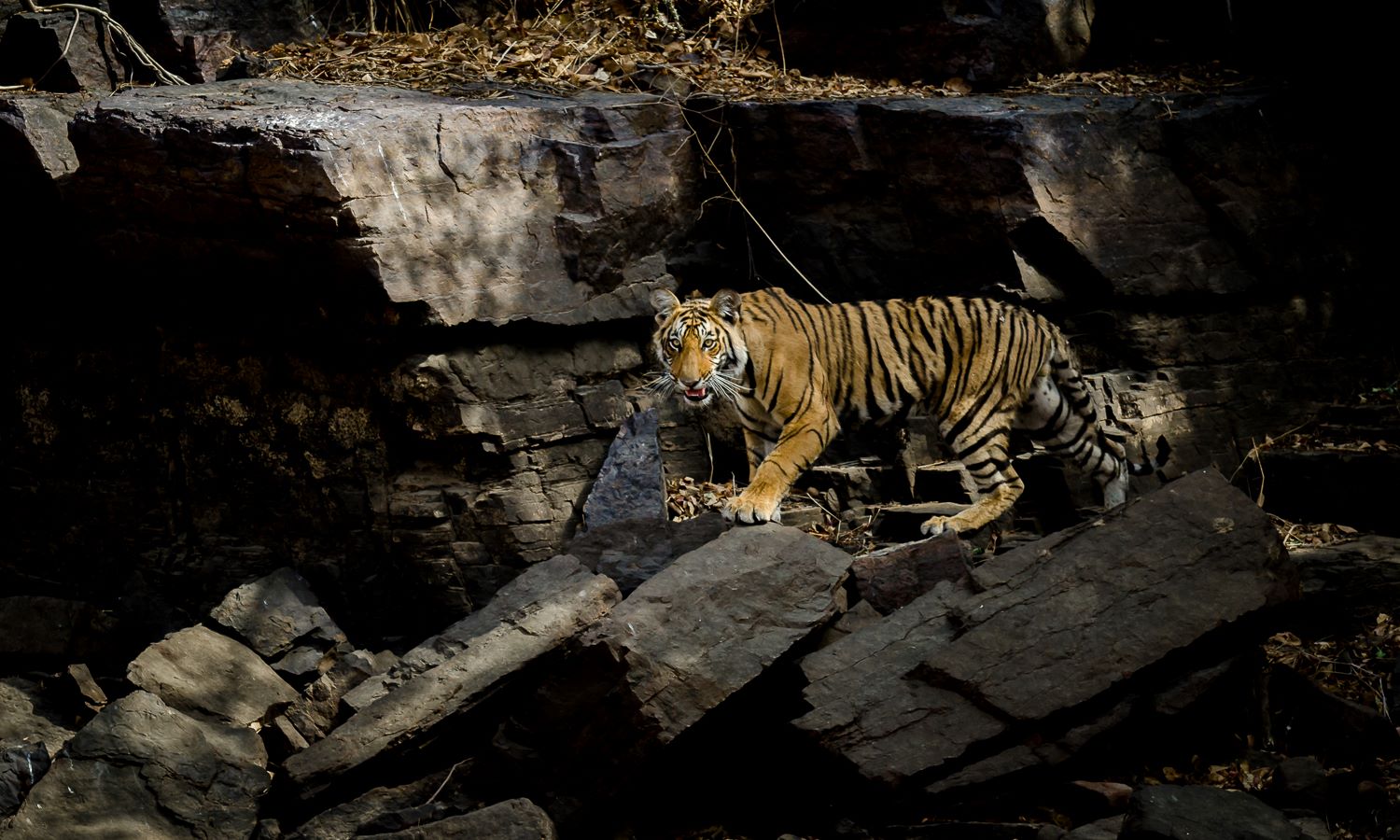
A full-day permit gives your naturalist complete flexibility. If he hears alarm calls from spotted deer in a different part of the forest, he can take you there. If fresh pugmarks appear on a track you passed an hour ago, you can double back. If you've found a tigress with cubs at a waterhole and she shows no sign of moving, you can stay as long as you like.
This kind of flexibility is what produces the encounters that become the stories guests tell for years.
What the day looks like
Your driver picks you up before dawn, and by the time you reach the gate the sky is only just lightening — you're inside the forest while most of the world is still asleep. The morning hours are the most active: tigers move, prey animals are alert, and the light is low, golden and angled, the light photographers cross the world for. Your naturalist uses this time to read the forest — fresh tracks, alarm calls, the behaviour of the langurs in the canopy.
By mid-morning the temperature climbs and the forest quietens. This is when most visitors leave. You stay. The midday hours have a different quality, slower and more meditative; it's when you notice the forest as a whole rather than scanning it for a single animal. Lunch, if you stay in, comes from the lodge as a packed meal — or you exit briefly, rest, and re-enter, since multiple entries are allowed on a full-day pass.
The afternoon builds slowly. Tigers that rested through the heat begin to move, the light shifts, and your naturalist puts the morning's picture to work: where the pugmarks were fresh, which waterhole had activity, where the alarm calls came from. By the time the gates close and you drive back in the dark, you've lived a day in the forest, not just visited it.