


TripAdvisor Travellers' Choice
•
#1 Sawai Madhopur
snow leopard expedition india
Bespoke Wilderness Expeditions

16 Years Tracking India's Wildlife.
Now Chasing the Grey Ghost of the Himalayas.

Custom snow leopard expeditions in Ladakh's Hemis National Park and Spiti Valley — led by naturalists and local spotters who track by pugmark and scat, not luck. Small groups, real high-altitude experience, honest sighting odds.

5-Star TripAdvisor Rated
Naturalist-Led Expeditions
High-Altitude Logistics Handled
Get My Custom Expedition WhatsApp Us Call Now

Most Trusted Name In Indian Wildlife Safari

Loved by travellers worldwide — with 5-star ratings on TripAdvisor & Google, Tigerwalah is your trusted partner for unforgettable wildlife adventures. Book your bespoke safari today!

TripAdvisor Travelers' Choice 2024
TripAdvisor Travelers' Choice 2025
TripAdvisor Travelers' Choice 2026
The Difficulty, Stated Plainly

This Is an Expedition, Not a Safari. Here's What That Means.

Most of what people know about wildlife travel in India comes from tiger safaris — a jeep, a warm morning, a few hours in the park. Snow leopard tracking has almost nothing in common with that experience, and we'd rather tell you now than have you find out on day three.

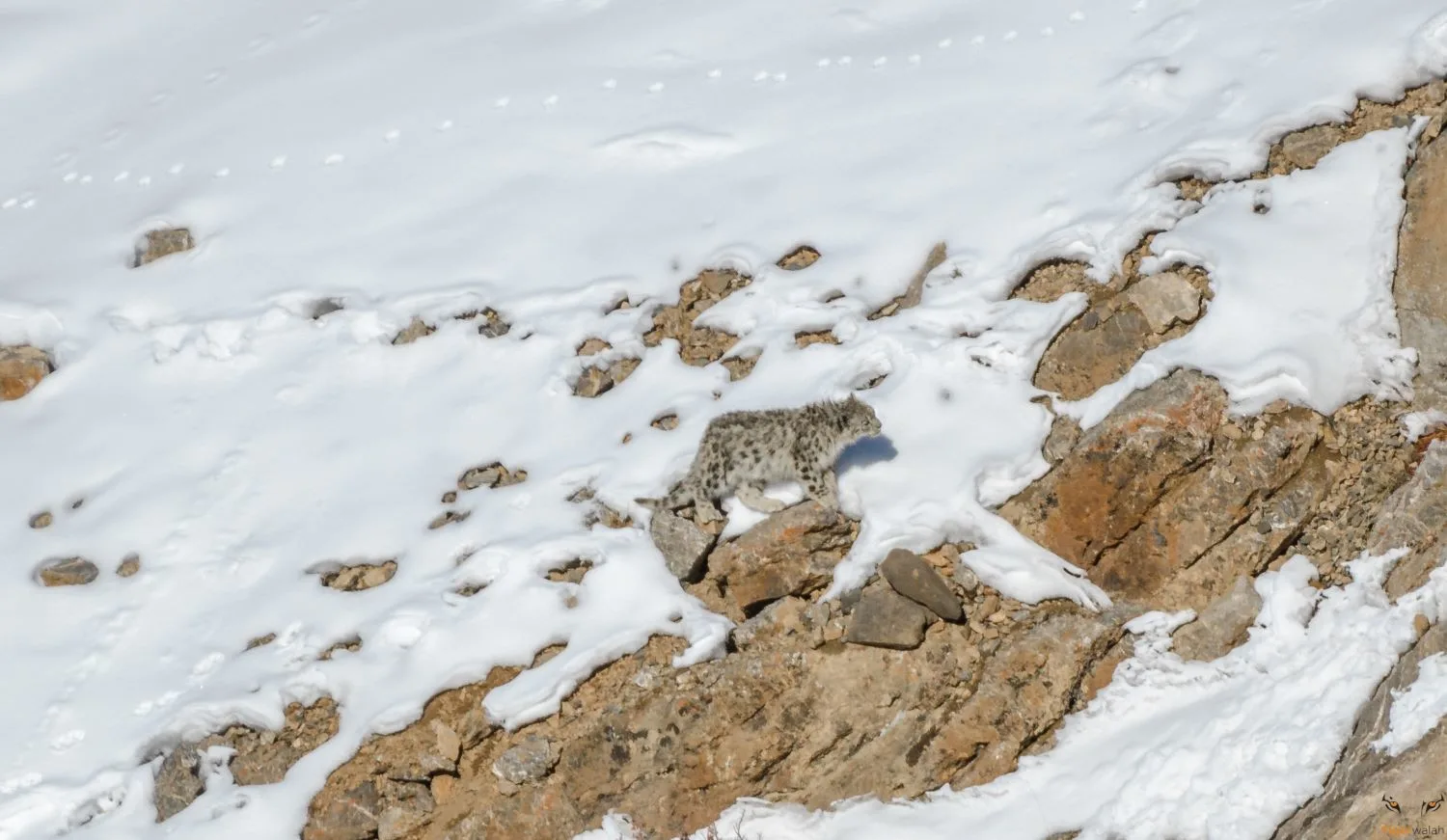
You'll spend long stretches — sometimes four to six hours — sitting still on a ridge in sub-zero temperatures, glassing a valley through a spotting scope, waiting for a shape to move against the rock. Altitude runs 11,000 to 14,000 feet. Some days you'll see nothing. That's the nature of tracking one of the most elusive cats on Earth — fewer than an estimated 400–700 snow leopards are believed to remain across all of Ladakh and Himachal Pradesh combined, spread across enormous, near-vertical terrain.

What we can promise: a team that has spent 16 years building the local spotter relationships that make a sighting possible at all, itineraries paced for real acclimatization, and complete honesty about your odds before you book — not after.

snow leopard spotter glassing valley
Why This Expedition Is Different

Built on 16+ Years in the Field.

01 Spotter Network, Not Guesswork

Snow leopards aren't found from a vehicle. They're found by people — local spotters in Ladakh and Spiti who've tracked this cat across the same ridgelines for generations, who know which valley a particular cat favors this winter and which slope the blue sheep (its primary prey) are moving toward. That network is not something you can build quickly. It's the actual product we're selling.

02 Built for High Altitude, Not Adapted From a Lowland Template

Every itinerary includes dedicated acclimatization days before serious tracking begins. We plan around altitude sickness risk, cold-weather logistics, and realistic daily exertion — this is expedition planning, borrowed from trekking operators, not a safari template with warmer clothes added.

03 Small Groups by Necessity, Not Marketing

Tracking snow leopards means long, silent, stationary waits. A group of 12 doesn't work — noise and movement cost sightings. We cap groups at 6–8 guests, sometimes fewer for premium departures, so nobody's chance at a sighting gets diluted by a crowd.

04 Realistic Expectations, Real Numbers

We will not promise a sighting. No responsible operator can, for this species. What we will tell you: across our last 3 winter seasons, 70%+ of expeditions had at least one confirmed sighting, and nearly all had confirmed fresh tracks, scat, or kill sites even on days without a direct visual. We treat that data as part of what you're buying — informed expectations, not marketing optimism.

Where You'll Go: Ladakh and Spiti

Two Regions. Very Different Expeditions.

We track snow leopards in two Himalayan regions. Ladakh, which holds 477 snow leopards, the most of any Indian region per the official 2024 SPAI census, is where we run expeditions in Hemis National Park and the Sham Valley villages of Ulley and Mangyu. Spiti Valley in Himachal Pradesh offers a quieter, road-based alternative. Each suits a different traveller.

Ladakh — The Heart of Snow Leopard Country

Fly into Leh at 11,500 feet and acclimatization starts the moment you land. From here, two very different expedition styles:

Spotter glassing the Rumbak Valley at dawn, Hemis National Park

Hemis National Park and the Rumbak Valley

India's largest national park, and its densest snow leopard habitat. The Rumbak Valley is the classic tracking ground: a small village inside the park itself, surrounded by ridgelines where spotters glass for cats moving between blue sheep herds. This is where India's strongest sighting numbers come from, and where our own spotter relationships run deepest.

Best for: maximum sighting odds, serious photographers, travellers with 10+ days.
Homestay in Ulley village in Sham Valley

Ulley

A hamlet of a handful of families in the Sham Valley, west of Leh, sitting around 13,000 feet above the Indus. The families who run the homestays here are often the same people who work as our spotters. You are not visiting snow leopard habitat; you are staying inside it, and your money goes directly to the community that protects the cat.

Best for: cultural immersion, smaller crowds, travellers who care where their trip's money goes.

Mangyu village and monastery in Sham Valley

Mangyu

Our quietest option. A Sham Valley village known for its thousand-year-old monastery complex, in an emerging snow leopard territory that sees a fraction of Hemis's visitors. Tracking here is rawer and less predictable, but you may have an entire valley to yourselves.

Best for: return guests, off-the-beaten-path travellers, those combining wildlife with Ladakh's living heritage.

Spiti Valley, Himachal Pradesh

The road less flown. Spiti is reached overland via Shimla and Kinnaur, a gradual two-day ascent that lets your body adjust naturally instead of flying straight to altitude. Tracking centres on the high villages around Kibber, at over 14,000 feet, where winter sightings often happen startlingly close to the villages themselves as cats follow blue sheep and ibex down to the valley rims.

Best for: first-time expedition travellers, shorter trip windows of 7 to 9 days, anyone who wants the journey to be part of the experience.

Spiti Valley Snow Leopard Expedition
Hemis & Rumbak Ulley Mangyu Spiti (Kibber)
Region Ladakh Ladakh (Sham Valley) Ladakh (Sham Valley) Himachal Pradesh
Access Fly to Leh Fly to Leh + drive Fly to Leh + drive Road via Shimla, 2 days
Sighting odds Highest Strong Emerging territory Strong
Stay Camp / homestay Community homestay Village homestay Homestay / guesthouse
Ideal trip 10+ days 8–10 days 8–10 days 7–9 days
Character The classic expedition Living with the spotters Valley to yourself The overland journey
Plan This Expedition → Plan This Expedition → Plan This Expedition → Plan This Expedition →
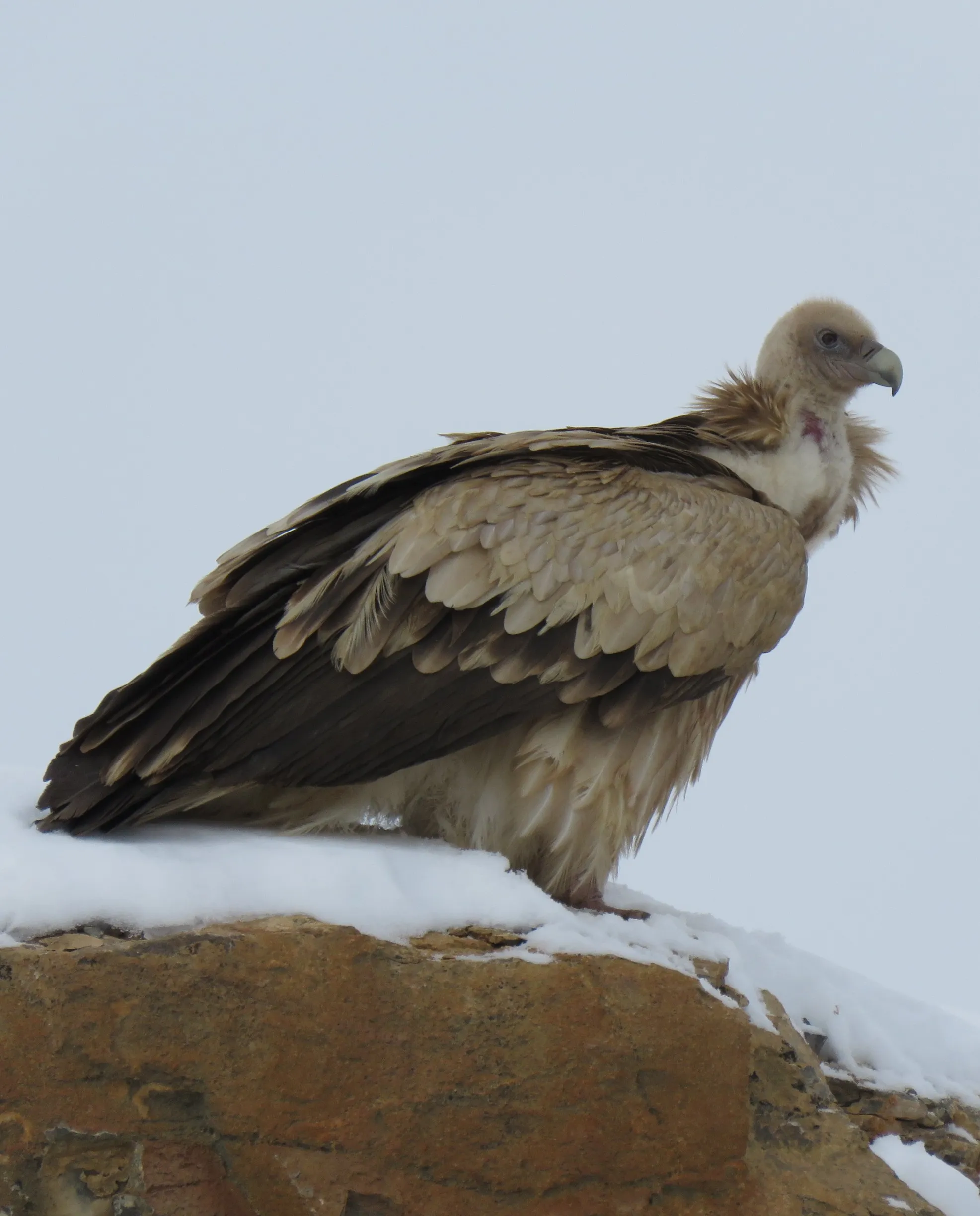
Himalayan Griffon Vulture
A Realistic Day in the Field

Patience and Persistence.

The hardest part of the day happens before you're out of bed.

  • First light: Our spotters and trackers head out at dawn, fanning out to scanning points across the valley. They glass the ridgelines and slopes in the coldest hours, when cats are most likely to be moving. This is the toughest work of the expedition, and it is theirs, not yours.
  • 8:00 AM: Breakfast at the homestay while reports come in from the field: fresh pugmarks on a trail, blue sheep bunching nervously on a slope, a possible shape bedded on a ledge.
  • 9:00–9:30 AM: You head out, going straight to the most promising point in the valley instead of searching cold. The spotters have already done the finding; your day starts where the evidence is.
  • Through the day: You stay out. Stationary glassing is the core of the expedition: quiet, patient, scope-assisted observation of the valley floor and opposing slopes. Hot lunch, tea and coffee come to you in the field. There is no returning to the lodge for a midday rest, because the middle of the day is often when a bedded cat finally moves. If the spotter network reports fresh activity in another valley, you shift.
  • 5:30 PM: Return as the light goes, roughly eight hours after you left.
  • Evening: Debrief with the spotters over dinner. Review the day's tracks and signs, and plan the next morning around where the cat is believed to be moving.

This rhythm repeats for the core tracking days of your expedition. That is why we are upfront that this suits a particular kind of traveller: patient, comfortable with cold and stillness, and motivated as much by the process of tracking as by the sighting itself.

Gear & Preparation

What You'll Need — and What We Provide

We provide: spotting scopes, high-altitude vehicles where roads allow, experienced local spotters, all permits, and detailed pre-trip guidance on layering, footwear, and cold-weather gear specific to your exact itinerary and dates.

You should plan to bring: expedition-grade cold weather layers (down to -20°C/-4°F on Ladakh departures), sturdy waterproof boots broken in well before the trip, and — for photographers — a lens in the 500mm+ range, since sightings are typically at real distance across a valley rather than close range.

We'll send a detailed, itinerary-specific packing list once your expedition is booked; the above is a general guide for planning purposes.

Wildlife Specialists & Naturalists

The Leadership Behind Your Expedition

Anurag Sharma — Founder & Chief Explorer

Anurag Sharma

Founder & Chief Explorer, since 2010
"I didn't build Tigerwalah to be a tour company. I built it to graduate park visitors into informed wildlife travellers — guests who see what the forest is, not what the brochure shows them."

Founded Tigerwalah in February 2010 after 13 years tracking big cats across India. Over the past decade, he has focused heavily on high-altitude habitats, personally mapping and leading deep-winter snow leopard expeditions across Ladakh and Spiti.

Pioneered ethical, small-footprint expedition models in fragile mountain ecosystems. He forged direct, lasting partnerships with local spotting networks and homestay communities to ensure expedition revenue directly supports ground-level conservation.

Combines decades of field experience with formal study in Wildlife Conservation at the Wildlife Institute of India, bringing a rigorously scientific and respectful approach to tracking the world's most elusive cat.

Our Operating Philosophy

We operate as a dedicated team of wildlife specialists, naturalists, guides and drivers committed to responsible, sustainable tourism with minimal impact on the environments we operate in. Every itinerary is planned with deep field ethics, ensuring authentic encounters while supporting local forest conservation.

16+ Years Operating Experience
7,000+ Jungle Safaris Led
30+ Countries Global Guests Served
80% Repeat & Referral Clients
Testimonials

What Our Guests Say

A Few Fixed Departures Are Still Open

Guaranteed dates, permits secured months ahead, senior naturalists at the helm. If a custom itinerary isn't essential, one of these might already fit.

↑ Fast Filling Jim Corbett Wildlife Safari
04 - 07 Feb 2027

Jim Corbett Wildlife Safari

Specialist Knowledge

Frequently Asked Questions

Everything you need to know about planning a snow leopard tracking expedition.

Ladakh vs Spiti — which is better for snow leopards?
We track snow leopards in two Himalayan regions. Ladakh, which holds 477 snow leopards, the most of any Indian region per the official 2024 SPAI census, is where we run expeditions in Hemis National Park and the Sham Valley villages of Ulley and Mangyu. Spiti Valley in Himachal Pradesh offers a quieter, road-based alternative. Each suits a different traveller.
What is the average cost of a snow leopard expedition?
A typical snow leopard expedition cost runs ₹1,20,000 to ₹3,50,000+ depending on trip length, region (Spiti vs. Ladakh), and accommodation style (traditional homestays vs. premium lodges). We provide transparent, all-inclusive quotes.
When is the best time to see snow leopards in India?
Peak season is mid-December to March. During these deep winter months, heavy snow at higher elevations drives the snow leopards' primary prey (blue sheep and ibex) into the lower valleys, and the cats follow them down, making tracking possible.
How physically demanding is the expedition?
You do not need to be a mountaineer, but you must be fit enough to handle severe cold (often well below freezing) and moderate walks at altitudes between 10,000 and 14,000 feet. Acclimatization days are built into all our Ladakh itineraries to ensure safety.
How far in advance should I book?
6 to 9 months in advance. Because we cap groups at 6-8 people and work with highly sought-after local spotters, prime winter dates and high-quality homestays fill up very early.
Are snow leopard expeditions suitable for kids?
Generally, no. Due to the extreme cold, high altitude, and the extreme patience required during long, stationary glassing sessions on exposed ridges, we recommend these trips only for older teenagers (16+) and adults.
What's included in a Tigerwalah expedition?
Everything from the moment you land: airport transfers, high-altitude acclimatization accommodation, heated homestays/camps in the field, 4x4 transport where roads allow, all permits, expert spotter networks, spotting scopes, and all meals.
Do you guarantee snow leopard sightings?
No one can guarantee sightings of a wild, highly elusive cat in a massive, rugged landscape. However, by leveraging expert local spotter networks and dedicating sufficient time (usually 6-8 days in the field), our historical sighting success rate is over 70%.

Ready to Track the Grey Ghost?

Contact our founders directly for a bespoke expedition proposal

Call Us Directly

+91 9871431155

WhatsApp Specialist

+91 8989416930

Email Enquiries

enquiries@tigerwalah.com

ENQUIRE NOW

Enquire Now

Fill out the form below to get started on your expedition.